 Tokyo Photoshoot
What to Wear for a Photoshoot in Tokyo
Deciding what to wear for a photoshoot in Tokyo is really three decisions, because the city gives photographers three completely different sets of light. Kabukicho at night throws saturated pink and blue onto whatever you brought. Sensō-ji at seven in the morning is soft, even and forgiving. A studio in Asakusa dresses you itself and your own clothes never appear. This page says what works in each, what the operators themselves ask for, and what the month does to all of it.
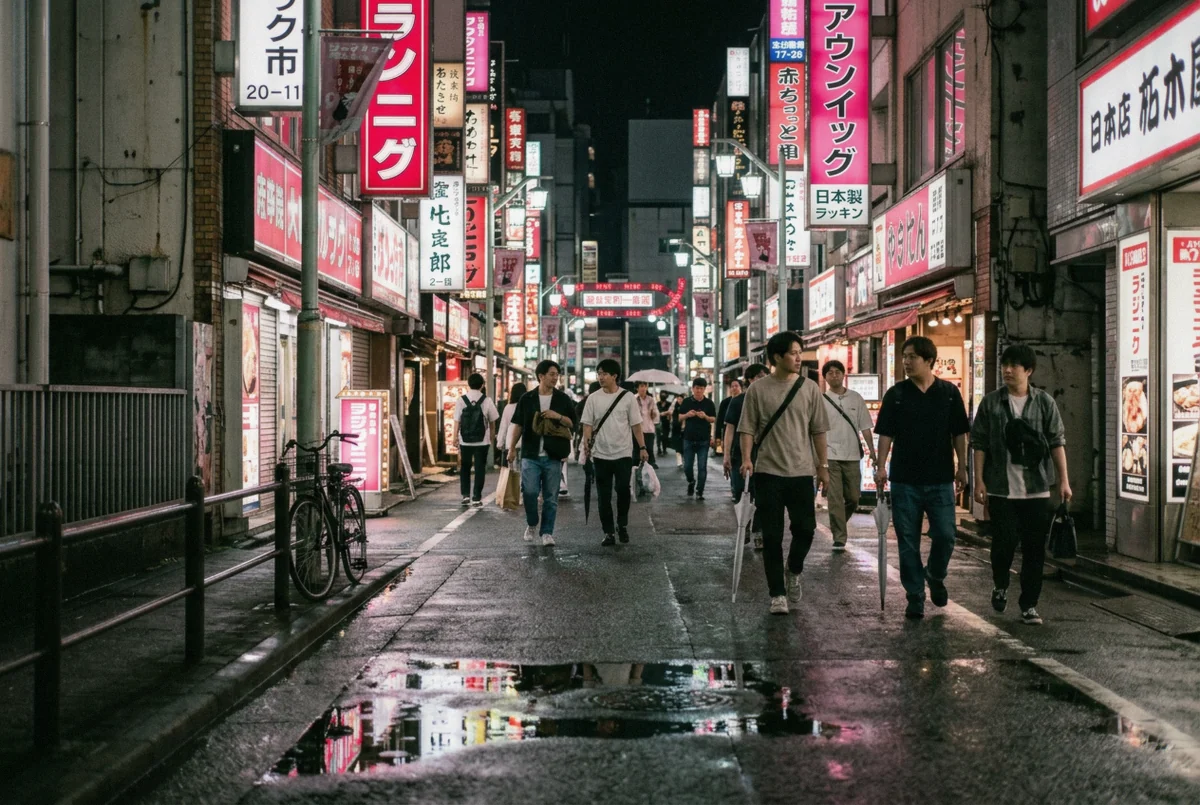
Neon is a light source with a colour. Your outfit is the screen it lands on.
Quick answer The short version: one rule per district, and the season note
For the neon districts wear something dark and simple: black, charcoal, deep green or a plain trench, so the signage colours land on you instead of fighting your clothes. The photographers who work these streets ask for exactly that, in those words. For Asakusa and the temples, wear something with a clean silhouette and quiet colour, or rent a kimono, which is what most people photographed there are wearing. For the studio makeover, wear whatever you like: the studio dresses you, though it asks women to arrive in a camisole and men in a wide-collar T-shirt so changing is quick. And whatever the plan, do not wear new shoes.
Key takeaways
- Two neon photographers ask specifically for dark or stylish clothing because it reads against the signage
- White and pale pastels take on whatever colour the sign above you is; that can be lovely or it can be radioactive
- One session asks you to bring rain gear, and two others sell rain as an upgrade, so waterproof outer layers are not a compromise
- Kimono rental has real sizing limits: adult kimono may not fit well under about 150 cm, and choice narrows above roughly 175 cm for women or 185 cm for men
- Tokyo's August average high is 31.4°C and January's is 10°C, which is the widest wardrobe swing of any city in this catalogue
One Rule Per District
The light is different enough between these three that the same outfit cannot be right in all of them. The Tokyo photoshoot comparison says which session works which district.
| District | Wear | Avoid | Because |
|---|---|---|---|
| Kabukicho and Shinjuku at night | Black, charcoal, deep colours, a plain coat | Busy prints, white, neon-bright colours | The signage supplies the colour; your clothes supply the shape |
| Shibuya at blue hour | Structured outerwear, one strong accent colour | Anything that blends into the crowd | You are one still figure in several hundred moving ones |
| Asakusa and the temples | Clean silhouette, muted tones, or a rented kimono | Beachwear, slogan tees, anything strapless | It is a working religious site and the frame is architectural |
| Sumida riverside | Soft layers, one lighter tone | Heavy black in full sun | Open sky and water bounce light back up at you |
| Studio makeover | A camisole or wide-collar T-shirt underneath | Complicated layers | The studio provides the costume and needs to change you quickly |
Why dark clothing wins under neon
Neon is a coloured light source rather than white light with colour added afterwards. A pink sign above you turns a white shirt pink, an ivory coat peach, and a pale grey jumper an indeterminate mauve that no amount of colour correction fully removes, because there is nothing neutral left in the frame to correct against. Dark fabric absorbs most of it and keeps its shape, so what the camera records is the silhouette of a person with coloured light along its edges, which is the look these sessions sell.
The operators say the same thing more briefly. One Shinjuku photographer asks guests to come in their favourite outfit and adds that dark or stylish clothing works especially well with the neon. Another says wear whatever you love, streetwear or vintage or minimalist, and then chooses the neon locations to match what you turned up in, which is the more flexible approach and the reason that session's route is decided on the night.
Pick By What You Booked
If you booked a neon session
one dark outfit with a defined shape, plus a compact umbrella. The cyberpunk session and the Instax shoot both work rain into the plan rather than around it
If you booked Asakusa in the morning
quiet colour and comfortable shoes, or commit properly and rent a kimono. The rental price breakdown has the shops and their return deadlines
If you booked the studio
arrive with your makeup done if the listing says so, in a camisole or wide-collar shirt, and leave the styling to them
If you are the one holding the camera
dress for two hours of walking rather than for the frame; the portrait workshop and the tower viewpoints walk are both on foot the whole time
The Month Decides More Than the District
Tokyo swings further through the year than most visitors plan for. The 1991 to 2020 normals put the August average high at 31.4°C with 155 mm of rain, and January at 10.0°C with 60 mm. Both of those are outfit problems, and they pull in opposite directions.
| Season | The problem | What to wear |
|---|---|---|
| March to May | Blossom week is one week and the wind ends it | Layers you can shed; a light coat that photographs well open |
| June | Rainy season, hydrangeas, high humidity | Waterproof outer layer, nothing that clings when damp |
| July and August | 31.4°C and humidity; makeup does not survive it | Breathable fabric, dark but light-weight; book after dark |
| September and October | The wettest months, 225 and 235 mm, typhoon season | Umbrella, shoes that dry, a backup indoor plan |
| November and December | Gold and red foliage, cold but dry, 60 to 95 mm | Coats, scarves, warm tones that sit against the leaves |
| January and February | 10°C, bare trees, the clearest air of the year | A proper coat; this is when a strong silhouette beats colour |
Kimono in the wrong month
A rented kimono in August is a decision you will regret by the second hour, which is why the shops rent lighter yukata from June to September and one chain drops the yukata price by ¥1,100 in that window. In December the opposite problem appears: kimono are worn with tabi socks and open sandals, and Asakusa's riverside is exposed. The rental shops know this and do not solve it for you.
Either accept a shorter shoot, or book the studio makeover, which is indoors from start to finish.
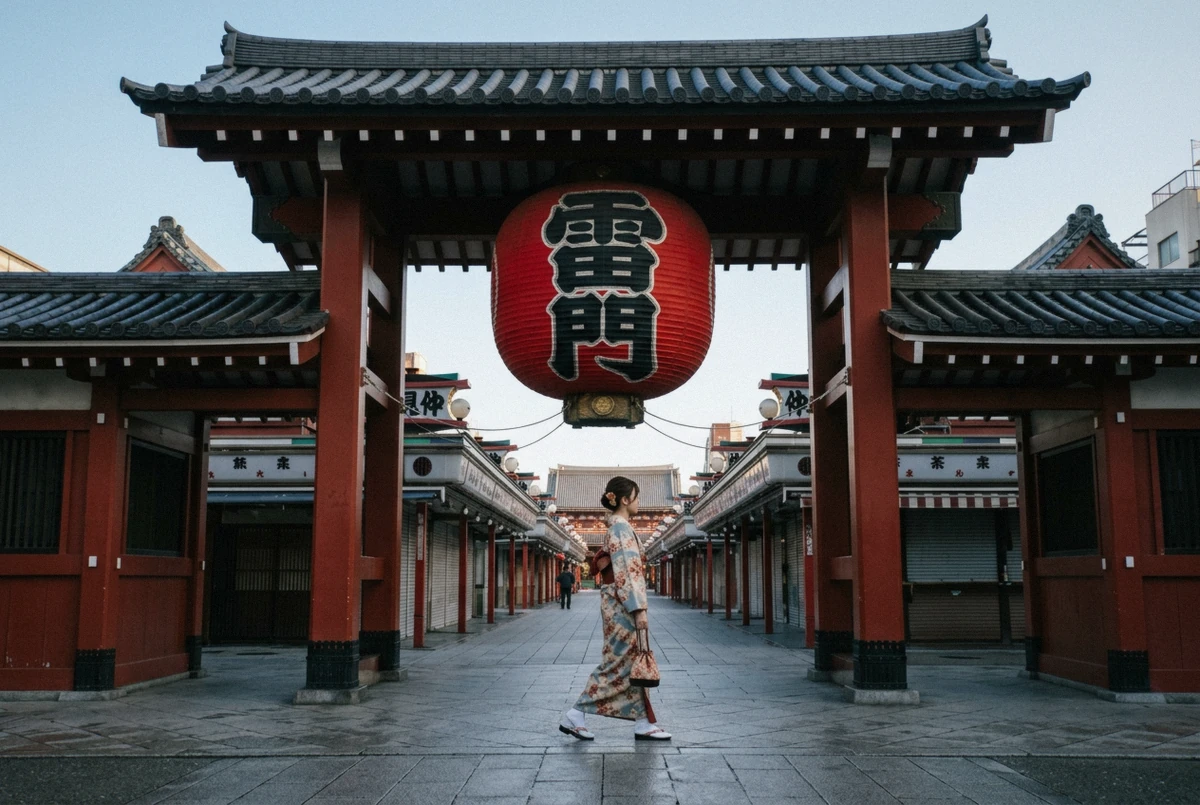
Soft even light at seven in the morning. Anything loud in the frame will be the loudest thing in it.
The Practical List
None of this is about fashion. These are the things that decide whether the second half of the session is any good.
Shoes, and why they end sessions early
Every street session here is a walk. The neon routes cover four or five stops across a district, the Asakusa sessions run from the gate to the riverside, and the workshops are on foot for their full length. New shoes, thin soles or anything that needs attention will show up in your face before it shows up in your feet.
In a rented kimono this is sharper still. Geta and zori are worn with tabi socks, they have no arch support, and Asakusa's paving is uneven. The rickshaw pairings that rental shops sell exist for exactly this reason. If you know you want three hours in kimono, plan a sitting stop into the middle of it. Session lengths are on the Tokyo photoshoot catalogue, and they range from fifteen minutes to three hours.
What one operator actually asks you to bring
Across the fourteen listings the requests are short and specific. One Shibuya session lists rain gear under what to bring and bans weapons and sharp objects, which is platform boilerplate rather than a comment on Shibuya. The cinematic session asks for comfortable shoes and comfortable clothes, and rules out video recording and nudity. The portrait workshop is the only one with a hardware requirement: a DSLR, mirrorless or film camera of your own, plus a charged phone, and it provides the flash.
The kimono listings ask for the opposite of preparation: arrive with makeup done, because makeup is not included, and expect the studio to handle everything else.
Two outfits, one session
Barely any listing allows a change of clothes, and the ones that do put it in writing: the 90-minute cinematic session says there is time for a simple outfit change, and the Asakusa session allows one on its two upper packages. Everywhere else, what you arrive in is what the whole gallery contains. If you want variety within an hour, get it from the route rather than the wardrobe, which is the argument for the sessions that cover three or four distinct stops.
The five-item packing list
Everything above condenses to this, whatever you booked. One dark outfit with a defined silhouette for a night session, or one quiet outfit for a temple morning. Shoes you have already walked in, because every session here is on foot. A compact umbrella, which doubles as a prop in the neon and saves the shoot in the rainy season. A charged phone with WhatsApp installed, since five listings use it to reach you and two treat fifteen unannounced minutes as a no-show. And cash for the train, because transport between districts is excluded on every listing that publishes exclusions.
Clothing Etiquette That Is Actually Enforced
Tokyo is relaxed about what visitors wear, with three exceptions that appear in writing rather than in folklore.
Gardens, costume and commercial shoots
Shinjuku Gyoen bans commercial photography inside the garden and explicitly restricts revealing clothing, swimwear and cosplay for image capture on its grounds. A Tokyo portrait studio warns separately that arriving in full bridal costume significantly limits where a session can take place, because several gardens restrict staged photography in formal dress. Rented kimono is welcome nearly everywhere; a wedding dress is a different conversation and needs to happen before you book.
Character cosplay has its own limit at one studio in the catalogue: no character costumes or goods that could raise copyright issues, and a maximum of two props per person. That rule is the studio's, not the city's, and it is enforced at the door. The full set of location rules sits on the photo spots map.
What to Wear in Tokyo: Questions People Ask
What should you wear for a night photoshoot in Tokyo?
Dark, simple and structured: black, charcoal, deep green, a plain coat. Two photographers on these listings ask for dark or stylish clothing in those words, because Kabukicho's signage supplies all the colour the frame needs. Pale clothing takes on whatever colour is above you, and it cannot be corrected out afterwards.
What not to wear for a photoshoot?
Busy prints, logos, anything that fights the background, and new shoes. In Tokyo specifically: white or pale pastels under neon, heavy black at midday on the river, and beachwear or slogan tees at Sensō-ji, which is a working temple. Shinjuku Gyoen goes further and restricts revealing clothing, swimwear and cosplay for photography on its grounds.
How should you dress in Tokyo as a tourist?
Cover the season first: 31.4°C average highs in August, 10°C in January, and 225 to 235 mm of rain across September and October. Tokyo dresses neatly rather than formally, so a plain, well-fitting outfit reads correctly everywhere. Comfortable shoes matter more than anything else on this list, because every session here is a walking one.
Can you wear a kimono for a Tokyo photoshoot?
Yes, and it is what most photographs taken in Asakusa show. Rental starts around ¥2,000, hair is included at some shops and an add-on at others, and everything goes back the same day between 17:00 and 18:00. The kimono rental breakdown compares the shops, and the Asakusa kimono walk bundles the garment with an optional hour of photography.
Can you change outfits during a session?
Rarely. Only the 90-minute cinematic session and the two upper packages of the Asakusa temple session say a change is possible. On every other listing, the outfit you arrive in is the one in every frame, so build variety into the route instead.
What if it rains?
In the neon districts, wear a waterproof layer and go anyway. Wet asphalt doubles the signage and two photographers advertise rain as the best conditions of the year; reviewers on both describe sessions that went ahead in a downpour. For temple mornings, rain is a genuine problem, and only one listing publishes a weather policy, so check the session comparison before you count on a reschedule.