 Tokyo Photoshoot
Tokyo Proposal Photoshoot
A Tokyo proposal photoshoot is a logistics problem wearing a romantic hat. The photographs are the easy part: any of the sessions in this catalogue can produce them. What decides whether it works is everything agreed before the day, the cover story, the signal, the standing position, and a location that will not have a tour group walking through it at the wrong second. One listing here is built for exactly that and includes a pre-shoot consultation; the rest of the Tokyo photoshoot catalogue can be adapted, and this page explains how.
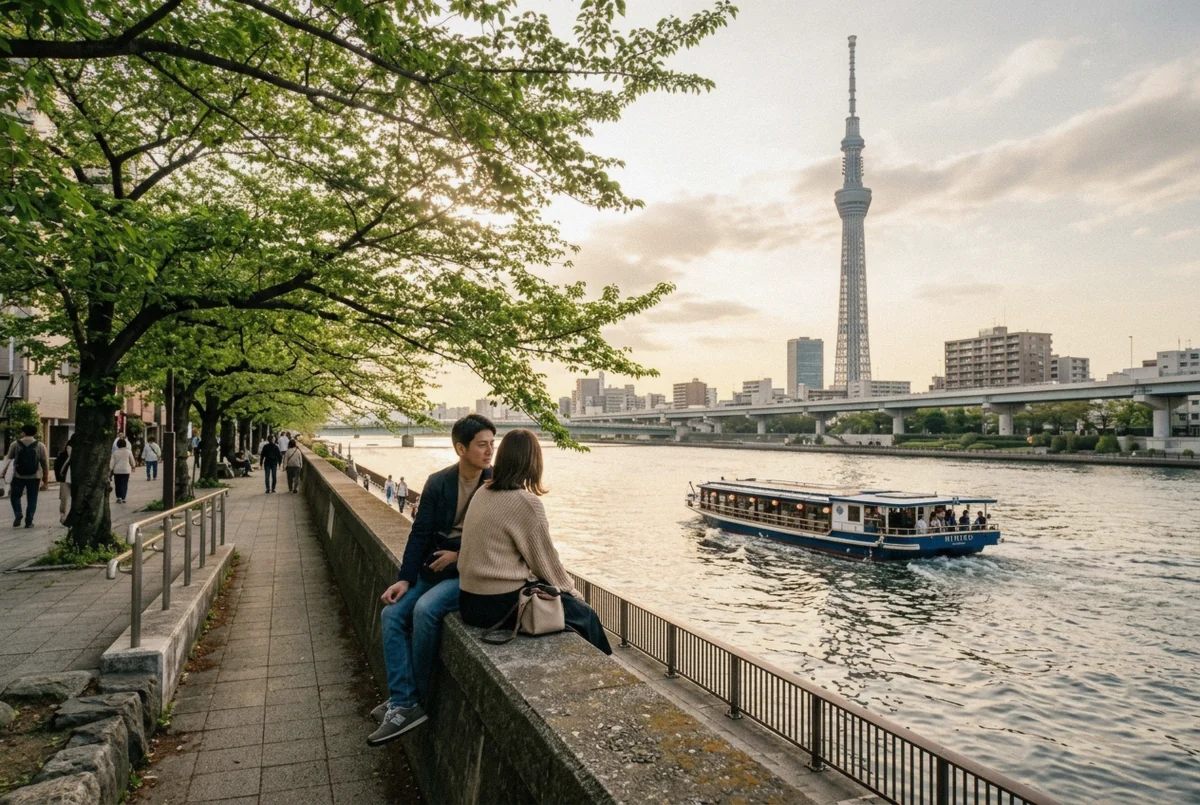
Open, quiet and five minutes from the crowds. Proposals need room, not landmarks.
Quick answer The short version: which session, which place, and what to agree beforehand
One session in the catalogue sells a proposal option outright: the Asakusa temple and riverside shoot includes a pre-shoot consultation, planning, timing guidance and discreet capture of the moment, from $91 for a group of up to twenty. Everything else can be adapted by telling the photographer in the pre-session message, which every operator sends anyway. Location matters more than the session: you want a place with room to stand still, which rules out the middle of Shibuya Crossing and rules in the Sumida riverside, Shiba Park under Tokyo Tower and the quieter end of Meiji Jingu's approach. Specialist proposal photographers exist in Tokyo at higher prices; the honest comparison is in the cost breakdown.
Key takeaways
- Only one listing publishes a proposal option, and it includes the consultation, the timing and the discreet capture
- Agree a signal in advance: a phrase, a hand in a pocket, a step to a specific mark. Photographers ask for one
- Book the hour, not the location: sunset light lasts about twenty minutes and the moment has to sit inside it
- Free cancellation is 24 hours on every listing here, which is your only lever if the plan changes
- Nothing in this catalogue is priced as a specialist proposal package, which is why the consultation option matters more than the price
Which Session Fits the Plan
If you want the proposal handled properly
the Asakusa temple and riverside session is the only listing with a published proposal option, consultation included, and its longer packages reach the quiet riverside
If you want it under Tokyo Tower
the Tokyo Tower session shoots the Zōjō-ji gate and Shiba Park, both of which have room to stand still, and its operator suggests starting 30 to 45 minutes before sunset
If you want neon rather than tradition
the cinematic street shoot is priced for two, gives 15 to 20 fully retouched frames, and its 90-minute option leaves room for the moment and the celebration afterwards
If you are proposing somewhere with no session at all
check the rules first: the photo spots map marks which locations restrict photography, and two of Shinjuku's best-known alleys do
The Logistics That Decide Whether It Works
A proposal shoot is a piece of theatre with one rehearsal and no second take. The photographers who do this regularly ask for the same handful of things in advance, and the listing that sells it explicitly says so: the proposal option includes a pre-shoot consultation, planning, timing guidance and discreet capture of the moment. Those four words are the entire service.
The cover story
Almost everyone uses the same one, and it works because it is true: we booked a photoshoot for the trip. It explains the photographer, the walking route, the direction and the standing around, and it means your partner is dressed for photographs rather than for a supermarket run. The only thing it does not explain is why the photographer keeps drifting behind a tree, which is why the discreet part is a skill rather than a setting.
If your partner would find a photoshoot itself suspicious, the alternative cover is a guided walk. The tower viewpoints walk is a guide rather than a photographer, so it cannot capture the moment, but it demonstrates the shape: a booked activity that puts you in a specific place at a specific time without anyone asking why.
The signal
Agree one thing that means now. A spoken phrase, a hand in a jacket pocket, or a step onto a specific mark you and the photographer both know. Photographers ask for this because the alternative is a photographer guessing, and a guess means the camera is at their hip when you go down.
Agree the counter-signal too: what happens if the moment is not right. A crowd arrives, it starts raining, your partner is upset about something else entirely. On listings with free cancellation 24 hours in advance you have already lost that lever by the time you are standing there, so the fallback should be a second location ten minutes away rather than a cancellation.
The standing position
Two things ruin proposal frames: your back and the background. Ask the photographer to place you both so that your faces are toward the light and the camera has a clean line, then step to that mark before you begin. Every listing here directs continuously anyway, so this is a normal part of the session rather than a special request.
Avoid the truly busy landmarks for the moment itself. Shibuya Crossing photographs beautifully as a scene and terribly as a proposal, because you have somewhere between forty and ninety seconds before the light changes and a wall of people walks through the frame. Do it in Shiba Park or on the riverside, then go to the crossing for the celebration photographs afterwards.
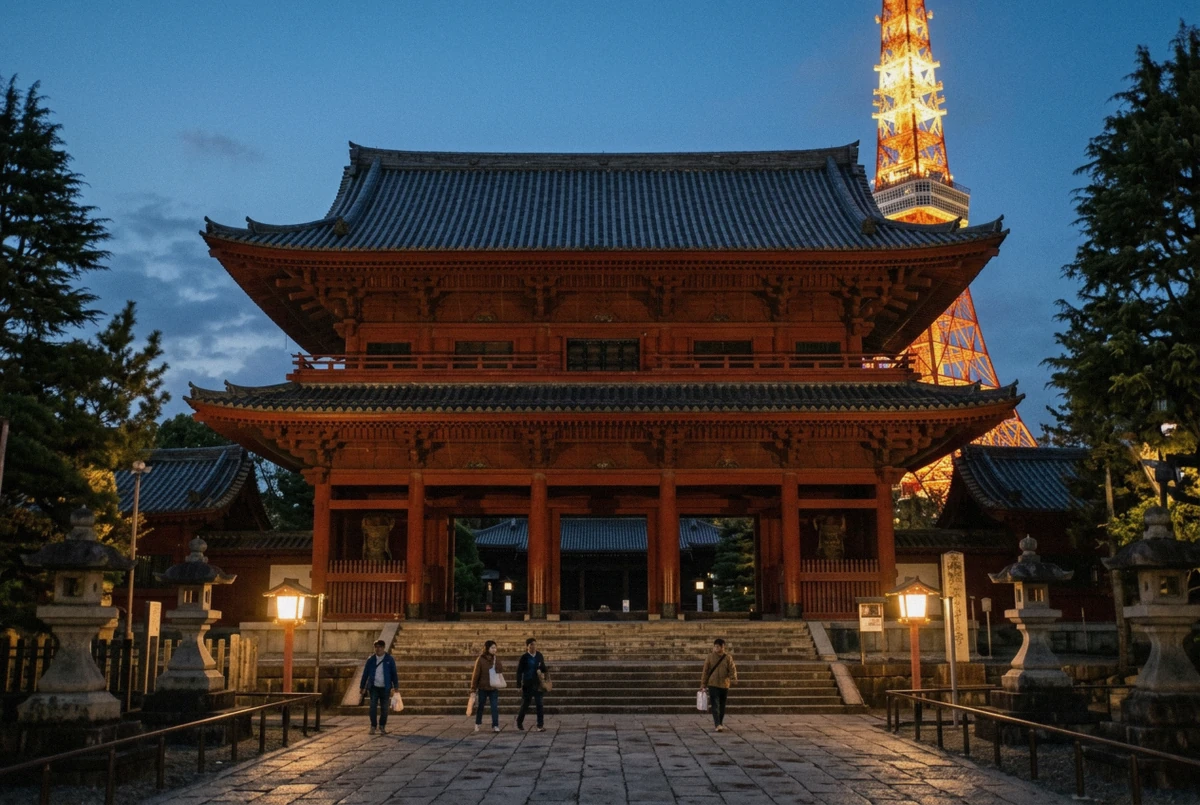
Shiba Park and the Zōjō-ji gate: room to stand still, with the tower doing the work behind you.
Where in Tokyo a Proposal Actually Works
The criteria are unromantic: room to stand still, a clean background, a place where nobody will ask you to move, and light that lasts more than a minute.
| Place | Why it works | Watch out for |
|---|---|---|
| Sumida Park riverside | Open embankment, the Skytree behind, few tour groups | Wind off the river in winter |
| Shiba Park under Tokyo Tower | Quiet lawn, tower lit above, room to move | The tower lights come on at dusk, so time it |
| Zōjō-ji main gate | Architecture with space in front of it | Working temple; keep the moment brief and quiet |
| Meiji Jingu approach | Forest, gravel, wide avenue, unhurried | Closes at sunset and no commercial shoots inside |
| Nezu Shrine torii tunnel | Intimate, striking, quiet on weekdays | Narrow, so two visitors fill the frame |
| Shibuya Crossing | Iconic celebration frames | Ninety seconds of light and a wall of people |
The rules that apply to a proposal like any other shoot
Shinjuku Gyoen prohibits commercial photography inside the garden, which includes a paid photographer capturing your proposal, and caps groups at ten people including models. Omoide Yokocho and Golden Gai both require the landlord's permission before any camera comes out. None of that stops you proposing there privately; it stops the photographer working there.
If a specific location matters more than the photographs, propose first and shoot afterwards somewhere permitted.
What It Costs, and What the Specialists Charge
There is no proposal premium in this catalogue. The Asakusa session sells the proposal option as part of a package that starts at $91 for a group of up to twenty, with 20, 50 or 75 edited photographs depending on the tier and delivery within 48 hours. The cinematic session at $233 is priced for two and gives the most retouched frames of anything here. The Tokyo Tower session starts at $57.
Outside the platform, Tokyo has a small industry of dedicated proposal and engagement photographers who quote per package rather than per hour, and their rates sit well above these. What that money buys is planning experience and a specialist's nerve, not a better lens. If the surprise is complicated, involves a third party, or has to be filmed as well as photographed, that is where it goes. If it is two people at sunset by a river, the difference is smaller than the price gap suggests.
| Option | Price | What it adds for a proposal |
|---|---|---|
| Asakusa temple and riverside | from $91 per group | Consultation, timing guidance, discreet capture, reel on the top tier |
| Tokyo Tower at Zōjō-ji | from $57 | Quiet lawn and a lit tower; operator times sessions to sunset |
| Cinematic street shoot | $233 for two | 15 to 20 fully retouched frames and a 90-minute option |
| Shibuya Crossing session | $134 per group | Celebration frames after the moment, not the moment itself |
| Dedicated proposal photographer | Quoted per package, higher | Planning experience, second shooter or video where needed |
The engagement session afterwards
Plan the celebration frames as a separate block of the same booking rather than as a different day. The moment itself takes ninety seconds; what people actually print is the twenty minutes afterwards, when both of you have stopped performing. That is an argument for the 90-minute options and for choosing a session with a route rather than a single spot: the Asakusa session can walk from the temple to the riverside, and the cinematic shoot covers a district on foot.
One thing to check before you pay
Whether the photographer will hold the ring. Some will, some will not, and no listing in this catalogue addresses it either way, which means it belongs in the pre-shoot message rather than in your assumptions. The same goes for a video clip of the moment: only one session in the catalogue includes a short edited reel, on the top package of the Asakusa shoot, and everywhere else you are buying stills.
Where the money actually goes
A proposal booking buys three things and only one of them is photography. The first is a person who has done this before and will not fumble the signal. The second is the timing: sunset light in Tokyo is a twenty-minute window and the moment has to sit inside it, which means the session start time is chosen backwards from the forecast rather than from your dinner reservation.
The third is the edit, and it is worth asking how many frames come back retouched rather than merely graded, because a proposal gallery is one of the few sets people actually print. On the listings here that number is published only on the cinematic session; everywhere else, assume colour correction and ask before you pay.
Tokyo Proposal Photoshoot: Questions People Ask
Is it worth getting a photographer for a proposal?
If you want the moment itself rather than the aftermath, yes, because nobody in the moment is holding a camera. The practical argument is narrower than the romantic one: a photographer gives you a reason to be in the right place at the right hour in the right clothes, which is most of what makes a proposal photograph work.
How much does a proposal photoshoot cost in Tokyo?
In this catalogue there is no proposal premium: the Asakusa session with its proposal option starts at $91 for a group of up to twenty, the Tokyo Tower session at $57 and the cinematic shoot at $233 for two. Dedicated proposal photographers in Tokyo quote packages well above those. The full ladder sets the market out tier by tier.
How do you keep it a surprise?
Book the photoshoot openly and the proposal secretly. A booked session explains the photographer, the walk and the outfits without raising a question, which is why it is the cover story almost everyone uses. Agree a signal with the photographer in advance so the camera is already up when you move.
Where is the best place to propose in Tokyo?
Somewhere with room to stand still: the Sumida riverside, Shiba Park under Tokyo Tower, the Zōjō-ji gate, or the approach at Meiji Jingu. Avoid the middle of Shibuya Crossing for the moment itself, because the light cycle gives you well under two minutes before a wall of people walks through the shot. The spot guide has the light and the access rules for each.
Can you propose at Shinjuku Gyoen or in the Shinjuku alleys?
You can propose anywhere. You cannot have a paid photographer shoot it inside Shinjuku Gyoen, which prohibits commercial photography, or in Omoide Yokocho and Golden Gai without the landlord's permission. If those places matter to you, propose privately and book the photographs somewhere permitted.
What if it rains on the day?
Every listing carries free cancellation up to 24 hours ahead, and only one publishes a real weather policy: a typhoon, an official warning or major transport disruption means a free reschedule or refund, while light rain proceeds. In the neon districts rain genuinely improves the photographs, so a Shinjuku fallback is a better plan B than a cancellation. Session by session, it is all in the comparison.
Do photographers here film the proposal as well?
Only one option does: the top package of the Asakusa session includes a 30-second professionally edited reel. Everywhere else in the Tokyo photoshoot catalogue you are buying stills, so if video matters, say so before booking rather than hoping.
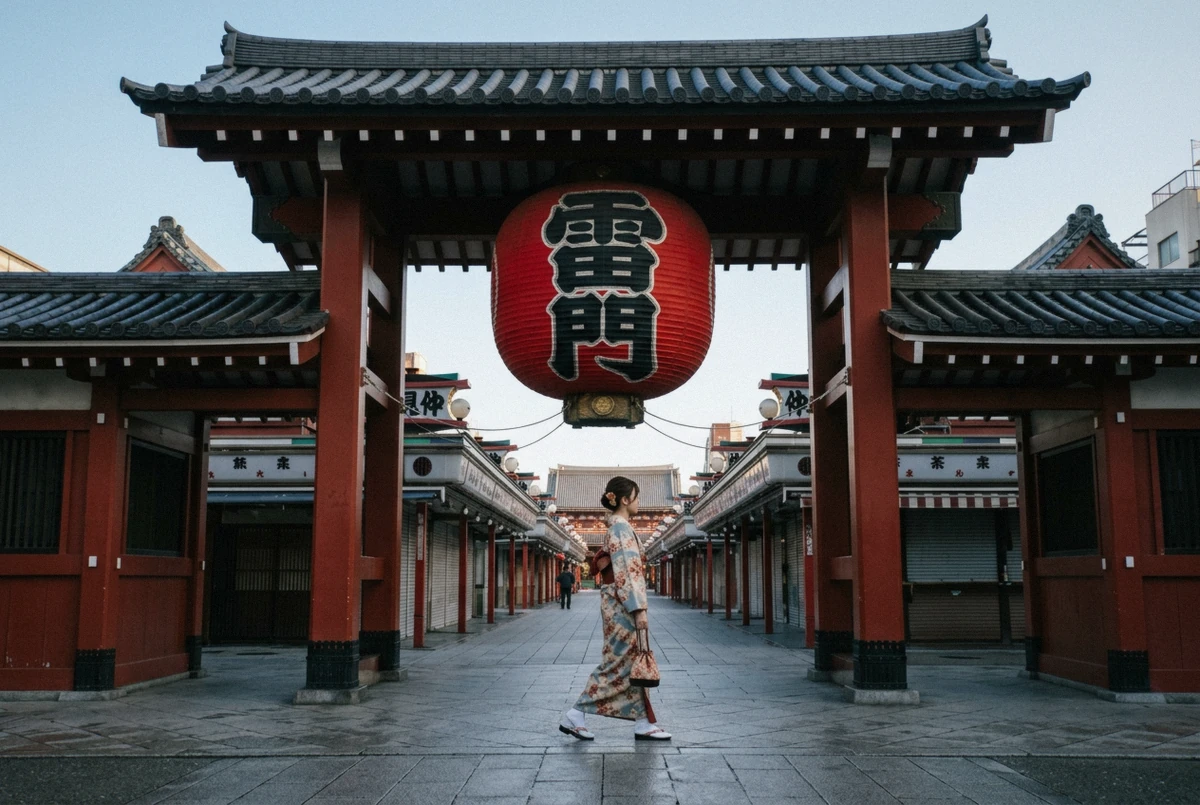
Asakusa before eight. The same district is unusable by mid-morning.