 Tokyo Photoshoot
Top 3 Hidden Tokyo Tower Photo Spots and Local Shrine
Almost everything written about Tokyo Tower photo spots is free advice, and this listing is the rare thing that charges for it: two hours with a local guide from gotcha Corporation at $55 per person, walking a small group to three vantage points over the tower and on to Atago Shrine. Read the inclusions list before you decide, because it contains one line and that line is Tour Guide. No photographer, no camera, no files afterwards. You bring your own camera and you take your own pictures, with somebody local deciding where you stand. That is a real product with a real audience, and it is the wrong product for at least half the people who find this page, so the difference is set out plainly below.
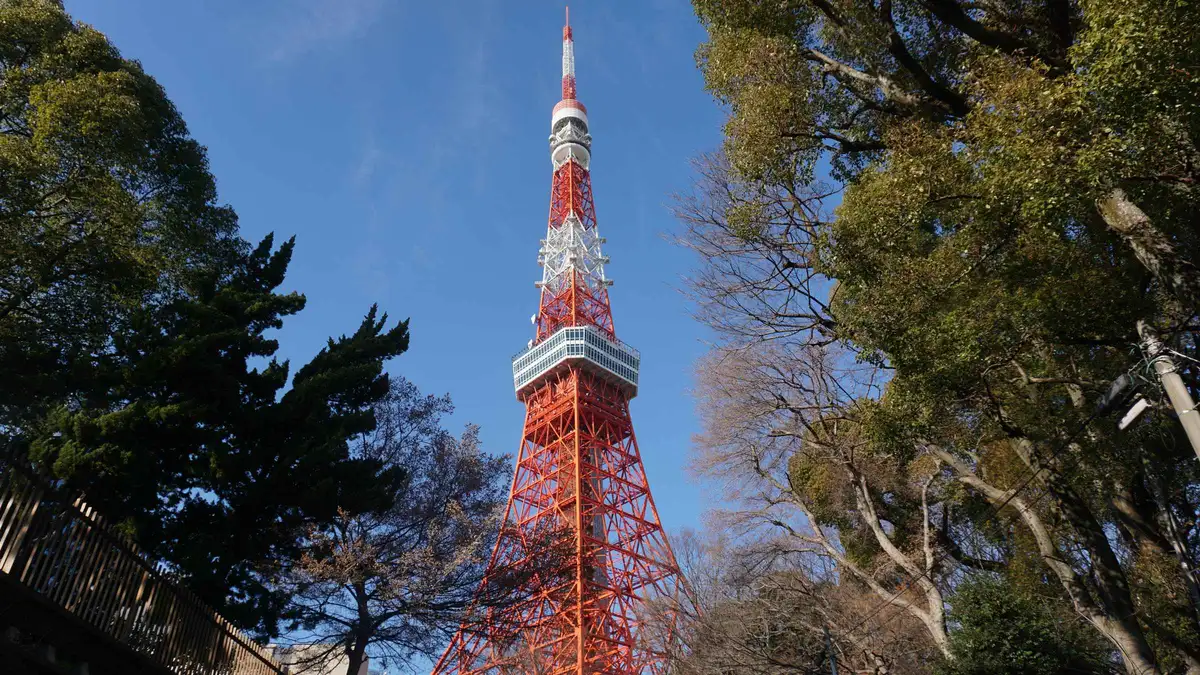
About This Tokyo Tower Photo Spots Walk
Six fields worth reading before the booking page loads, taken from the operator's own listing in August 2026. It is a short listing, and several of the answers are that nothing is stated.
2 hours; start times are shown at checkout and no internal timings are published
$55 per person, checked August 2026
None. This is a new activity with no reviews and no rating at the time of checking
Nothing is delivered. You keep whatever you photograph on your own camera
Three viewpoints over Tokyo Tower chosen by the guide, plus Atago Shrine and its Success steps
Photographers who want a local to navigate for them, in a small group limited to 5 participants
Listing at a Glance
The same fields on every session page here, read off the operator's listing in August 2026. Where the listing is silent this table says so rather than filling the gap, and on this listing it is silent more often than on any other in the catalogue.
- Session name Tokyo: Top 3 Hidden Tokyo Tower Photo Spots and Local Shrine
- Operator gotcha Corporation
- Product ID 612959
- Starting price $55 per person
- Price last checked August 2026
- Rating None yet, listed as a new activity
- Review count No reviews at the time of checking
- Duration 2 hours
- Start times Shown at checkout
- Meeting point Kamiyacho Station exit 3, in front of the FamilyMart; the guide holds a signboard reading gotcha
- End point None stated
- Itinerary No timed itinerary is published. The description names three viewpoints over the tower and Atago Shrine
- Group size Small group, limited to 5 participants
- Languages English, with a live tour guide
- What is included Tour Guide. That is the entire inclusions list, and it is one line long
- What is excluded No exclusions list is published. Transport, food and drinks are not mentioned either way
- Camera Yours. No camera, lens or equipment is provided
- Photos included None. Nothing is shot for you and nothing is sent afterwards
- Delivery time Not applicable, because there is nothing to deliver
- Editing None offered
- Tuition None advertised. The guide navigates and narrates; the listing does not promise camera instruction
- Shrine visit Atago Shrine, described on the listing as a place of worship as well as a viewpoint
- Steps The Success steps at Atago Shrine are steep stone stairs; the listing names them as a highlight
- Transport On foot around Minato ward
- Hotel pickup None stated
- Weather policy None stated
- Late arrivals None stated
- Wheelchair accessibility None stated. The stone steps at the shrine are steep
- Minimum age None stated
- Difficulty Moderate, on account of the steps rather than the distance
- Cancellation Free cancellation up to 24 hours before the start, for a full refund
- Reserve now, pay later Available, so the slot can be held with nothing to pay today
- If you want to be photographed Book the Zōjō-ji session instead, at /tokyo-tower-photoshoot/
Check Dates and Availability
Live start times and prices from the operator, with free cancellation up to 24 hours before the start.
Quick answer What one line in the inclusions list tells you, and who should book something else
Two hours with a local guide at $55 per person, in a small group limited to 5 participants, walking to three viewpoints over Tokyo Tower and to Atago Shrine, which was enshrined as a god of fire prevention more than 400 years ago and is known for its steep stone Success steps. The inclusions list is one line long and reads Tour Guide. You carry your own camera, you take your own photographs, and nothing is delivered afterwards because nothing is shot for you. The listing is new, with no reviews, no rating, no published timings and no weather policy.
Key takeaways
- If you want to be in the pictures, this is the wrong listing: the Zōjō-ji session puts a photographer on the same tower at $57 per person
- The three viewpoints are not named anywhere on the listing, so what you are buying is local knowledge rather than a published route
- This is the second camera-in-your-hands product on the site; the other, the portrait photography workshop, teaches technique and hires a model
- Free viewpoints around the tower, and what light each one wants, are mapped in the spot guide
- Price, length and what each session hands over sit side by side in the comparison table
A Guide, Not a Photographer
One line in the inclusions list separates this booking from almost everything else sold under the word photoshoot in Tokyo, and it is easy to skim past on a phone.
What Tour Guide means in practice
The listing includes a live tour guide and nothing else. No camera, no lens, no lighting, no editing, no files, no gallery link, no delivery window. The guide's job is to take you to places, tell you what you are looking at, and get out of the frame. The listing describes it as the guide assisting your photo shoot session and supporting your trip, which is an accurate description of a navigation service.
That is not a criticism. Anyone who has tried to find a good angle on Tokyo Tower in a hurry knows the problem it solves: the tower is visible from half of Minato ward and photogenic from very few of those places, the good angles sit on ordinary residential streets that no signpost mentions, and working them out from a phone map costs an evening. Paying somebody to walk you there in two hours is a rational purchase, particularly on a short trip.
Who it is genuinely for
Bring a camera you already know how to use. The listing promises no tuition, so this is not the place to learn exposure, and the value only shows up if you can work quickly once you are standing somewhere good.
It suits three people in particular. The traveller with a real camera and two free hours who wants coverage rather than instruction. The photographer who would rather ask a local than read four blog posts of contradictory advice. And the person who wants the shrine as well as the tower, because Atago is not on the standard tourist route and the walk between the two is the part that no free spot list bothers to describe.
It does not suit anyone whose actual goal is photographs of themselves in Tokyo. That is the most common reason people search these terms, and the honest answer is that this booking cannot produce them.
The third product hiding under one word
This site tracks fourteen sessions and they split three ways. Nine of them are a photographer shooting you. Two put the camera in your hands. One is a dress-up product where the shoot is an optional add-on. The word photoshoot covers all three on the same search results page, which is why so many people book the wrong thing.
The two camera-in-your-hands listings are not interchangeable either. This one is navigation: a guide, a route, no teaching, up to five people. The portrait photography workshop at Hachiko is tuition: an instructor, a maximum of two students, camera settings, composition and light theory, off-camera flash practice, a hired local model to photograph, and individual feedback. You must bring a DSLR, mirrorless or film camera to that one; a phone is not the tool. Different products, and neither of them ends with photographs of you.
Three Viewpoints and a Shrine
The listing sells four places and names one of them. That is worth stating flatly, because a promise of hidden spots is only as good as the person keeping it.
The three viewpoints are unnamed
The description says the guide will show you the best top three views over Tokyo Tower. It does not say where they are, and neither does the itinerary, because the listing publishes no itinerary. What you are buying is a person's judgement on the day.
The upside is that unnamed spots stay usable. The angles that circulate on social media are crowded precisely because they are named, and a guide walking a route they chose themselves can steer around whatever is busy. The downside is that you cannot check the route against your own shortlist before booking, and if there is a specific frame you have already seen and want, the only way to find out whether it is on the walk is to ask the operator before you pay. The vantage points this site maps around the tower, including the Akabanebashi crossing where the tower rises straight up the centre of the road, are set out with their best light in the spot guide.
Atago Shrine and the Success steps
The one place the listing does name is the reason to consider it. Atago Shrine was enshrined as a god of fire prevention more than 400 years ago, in the early Edo period, and it sits on Tokyo's highest natural hill in the ward. Its famous feature is the flight of steep stone steps known as the Success steps, and the guide explains the history behind them and their place in Japanese life and culture.
For a camera, the steps are the whole point. They are steep enough that the frame from the bottom compresses into a wall of stone with sky at the top, and the view down from the shrine gate puts the modern district below at an angle you cannot get anywhere else nearby. It is also a working shrine with people visiting to pray, and the listing describes the visit as worship as well as sightseeing, which is worth remembering before setting up in the middle of the approach.
Practically: the steps are steep, the listing states no accessibility provision, and two hours on foot in a Tokyo August at over 31 degrees is a different proposition from the same walk in November.
The tower itself, according to the listing
The description gives the tower 333 metres of red steel and makes a point that most guides skip: its role as a radio tower has ended, and it remains a beloved spiritual centre for people in Japan rather than a piece of working infrastructure. Broadcasting moved on. The affection did not.
That is a useful frame for the walk. What you are photographing is a landmark that the city keeps for sentimental reasons, which is also why it appears in so many domestic films and why the viewpoints that matter locally are not the ones that rank on English-language searches. A guide from the neighbourhood is the shortest route to the second list.
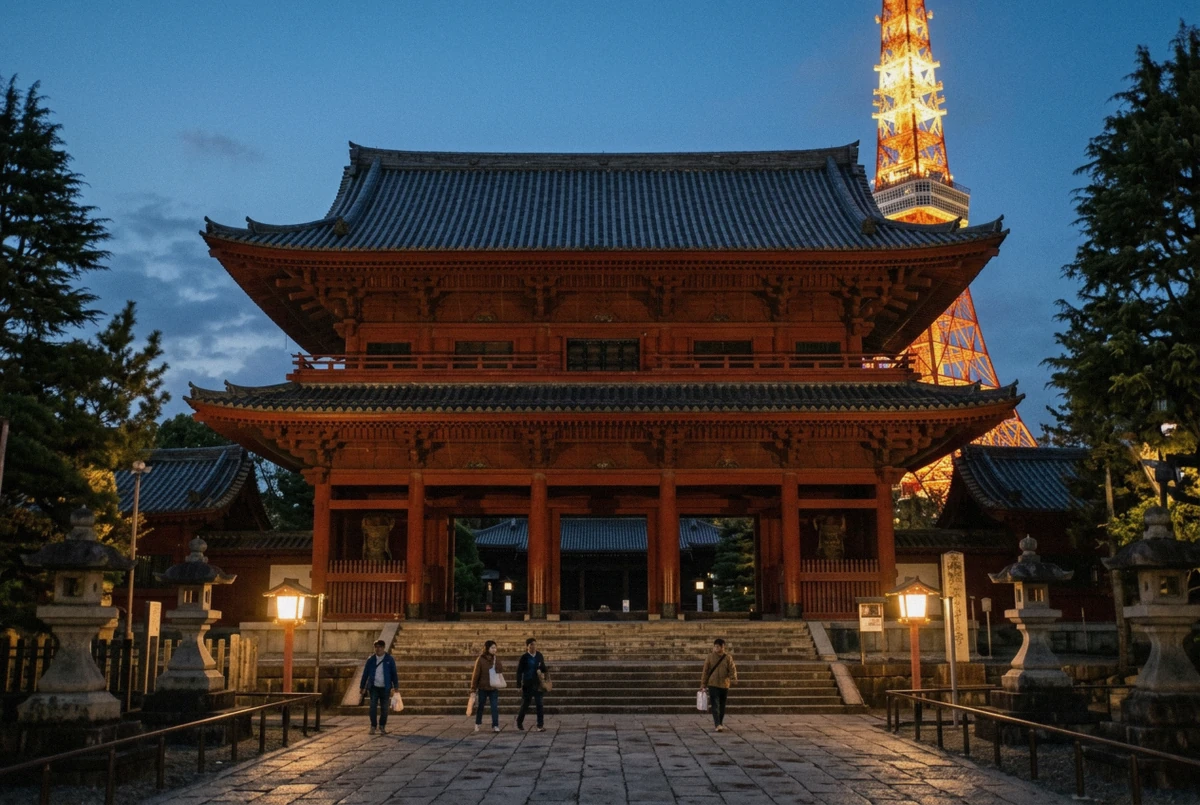
The tower is visible from half of Minato ward and photogenic from very few of those places. The listing does not name the three it uses.
What the Listing Does Not Publish
This is the shortest listing in the catalogue and the silences are as informative as the text. Rather than filling them in, here is what is missing and what to do about each gap.
The gaps, one by one
Nothing here is hidden. It is simply a short listing from an operator that has not filled in the optional fields, which is common on new activities and becomes a problem only if you assume the blanks are answers.
| Field | What the listing says | What to do |
|---|---|---|
| Reviews | New activity, none yet | Judge it on the route description, not on a rating |
| Weather | No weather policy at all | Use the 24-hour free cancellation as your umbrella |
| Timings | No itinerary and no internal schedule | Ask how the two hours split if you have a hard stop after |
| Exclusions | No exclusions list published | Assume transport, food and drinks are yours |
| Accessibility | None stated | The Success steps are steep; ask first if that matters |
| Minimum age | None stated | Ask before booking for children |
No reviews is not the same as bad reviews
The listing carries no rating because nobody has left one yet, which is the position every session on this site started from. The other new activity in the catalogue, the portrait photography workshop, is in exactly the same state. It means the usual signal is missing, not that the signal is negative, and free cancellation up to 24 hours before the start limits the cost of being early to something.
What you can read instead is the listing's own specificity. Vague listings promise amazing experiences; this one names a shrine, dates it to the early Edo period, describes the steps, gives the tower's height and mentions that its broadcasting role has ended. Somebody who knows the neighbourhood wrote that. The same page also carries a small typo in the meeting-point line, where the signboard name is wrapped in doubled quotation marks, which is a fair reminder that this is a small operator rather than a polished platform product.
Finding the start, and what to carry
Kamiyacho Station, exit 3, in front of the FamilyMart. The guide holds a signboard reading gotcha. Kamiyacho is on the Hibiya line and the walk to the tower from there is a few minutes uphill, which tells you roughly where the first viewpoint is likely to sit.
Carry the camera you can operate without thinking, a spare battery if you are shooting into dusk, and shoes for stone steps. Leave the tripod at the hotel unless you have checked: two hours with a group of five moving between street viewpoints is not tripod work, and shrine grounds across Tokyo restrict equipment more often than visitors expect. The restrictions that catch photographers elsewhere in the city, including two Shinjuku alleys that prohibit photography without prior permission and a garden that bans commercial shoots outright, are listed in the spot guide.
Book the Other Tower Session Instead If
Both of the Tokyo Tower listings compared here cost within a couple of dollars of each other and produce completely different outcomes. Getting this choice wrong is the single most expensive mistake available on this search term, so here it is in plain terms.
The straight comparison
One of these hands you a guide. The other hands you photographs. Both work around the same tower on the same afternoon.
| This guided walk | Zōjō-ji photoshoot | |
|---|---|---|
| What is included | Tour guide only | Photographer, direction, edited files |
| Who holds the camera | You | The photographer |
| Length | 2 hours | 30, 60 or 90 minutes |
| Price | $55 per person | $57 per person |
| Group | Small group, up to 5 | Private, your group only |
| You receive | Nothing; your own shots | 20 to 80 photos within 48 hours |
| Rating | New, no reviews | 5.0 from 6 reviews |
Book the Zōjō-ji session if
You want to be in the photographs. That is the whole test, and it decides it in one sentence.
- The pictures are for an engagement, an anniversary or a family that is rarely all in one country
- You are travelling solo and cannot photograph yourself in front of a landmark convincingly
- You want edited files on your phone within two days rather than a memory card to work through at home
- You want the tower base and the temple gate handled by somebody who shoots them weekly
Book this walk if
You are the photographer and the problem you are paying to solve is where to stand.
- You own a camera you are comfortable with and want two hours of local navigation
- Atago Shrine and its Success steps interest you as much as the tower does
- You would rather shoot the tower yourself than appear in front of it
- A small group of up to five is acceptable, and you do not need a private guide
Or take the whole city rather than one landmark
The tower is one subject among many, and two hours around it is a narrow slice of Tokyo. If the reason you are booking anything is that you want a set of photographs of your trip, the sessions in this catalogue that people book most are the neon ones after dark: the Shibuya neon photo tour at the crossing, and the Asakusa temple and riverside session for the daylight counterpart at Sensō-ji and Sumida Park.
All fourteen are compared on the Tokyo photoshoot catalogue, from the cheapest shared group session to the private cinematic shoot at $233 per group of two, with delivery times and photo counts next to each price.
Tokyo Tower Photo Spots Questions
Where is the best spot to take a photo of Tokyo Tower?
It depends on what you want in the frame. The Zōjō-ji main gate stacks a 400-year-old temple gate in front of the steel; the Akabanebashi crossing puts the tower straight up the centre of the road; Shiba Park sits close enough for the legs and the underside; and Atago Shrine adds height and stone steps. This walk uses three viewpoints of the guide's own choosing plus the shrine. The mapped versions, with the light each one wants, are in the spot guide.
What are the most photogenic places in Tokyo?
Beyond this tower, the four districts that the sessions on this site concentrate in are Shibuya for the crossing and its screens, Shinjuku for neon alleys, Asakusa for Sensō-ji and the riverside, and Minato for the tower itself. Thirty-two individual spots, with the light and the hour each one needs, are mapped on the spot guide.
Does anyone photograph me on this walk?
No. The inclusions list is one line long and reads Tour Guide. You carry your own camera and take your own pictures, and nothing is delivered afterwards. If you want to be in the photographs, the Zōjō-ji session around the same tower is the one to book.
Where can I take pictures at the Tokyo Tower car park, or on the stairs?
Both frames circulate widely on these searches and neither is named on this listing, which does not publish where its three viewpoints are. We are not going to guess at a route the operator keeps to itself, and the car park and stair approaches are on the tower's own premises rather than on public street, so ask the guide on the day. The vantage points this site has mapped and verified are in the spot guide.
What is Atago Shrine and why is it on a photography walk?
It was enshrined as a god of fire prevention more than 400 years ago, in the early Edo period, and it is known for a steep flight of stone steps called the Success steps. It gives the walk height, a second subject and a piece of history the guide narrates. It is also an active place of worship, so the usual courtesies apply.
How many people are on the walk?
It is a small group limited to 5 participants, guided in English. That is larger than the two-student cap on the portrait photography workshop and smaller than most walking tours in the city.
What happens if it rains?
The listing publishes no weather policy, so there is nothing to hold the operator to. Free cancellation up to 24 hours before the start is the protection you have, which means watching the forecast the day before. September and October are Tokyo's wettest months and its typhoon season.
Prices, availability and terms are set by the operator and confirmed at checkout.
We may earn a commission if you book through one of our links, at no extra cost to you. Full affiliate disclosure