 Tokyo Photoshoot
What a Tokyo Photoshoot Costs
Tokyo photoshoot cost is one of those questions where every answer you find is quoted by someone with a stake in it. A concierge service publishes a from-price for thirty minutes. A rental shop quotes a photo package on top of a garment. A local photographer quotes per hour and leaves the number of edited photographs vague. This page puts the whole ladder in one place, using the published prices of the fourteen sessions we track and the public rates of the services that rank alongside them, then does the arithmetic that actually matters: what you pay per edited photograph, and which extras are excluded on every listing.
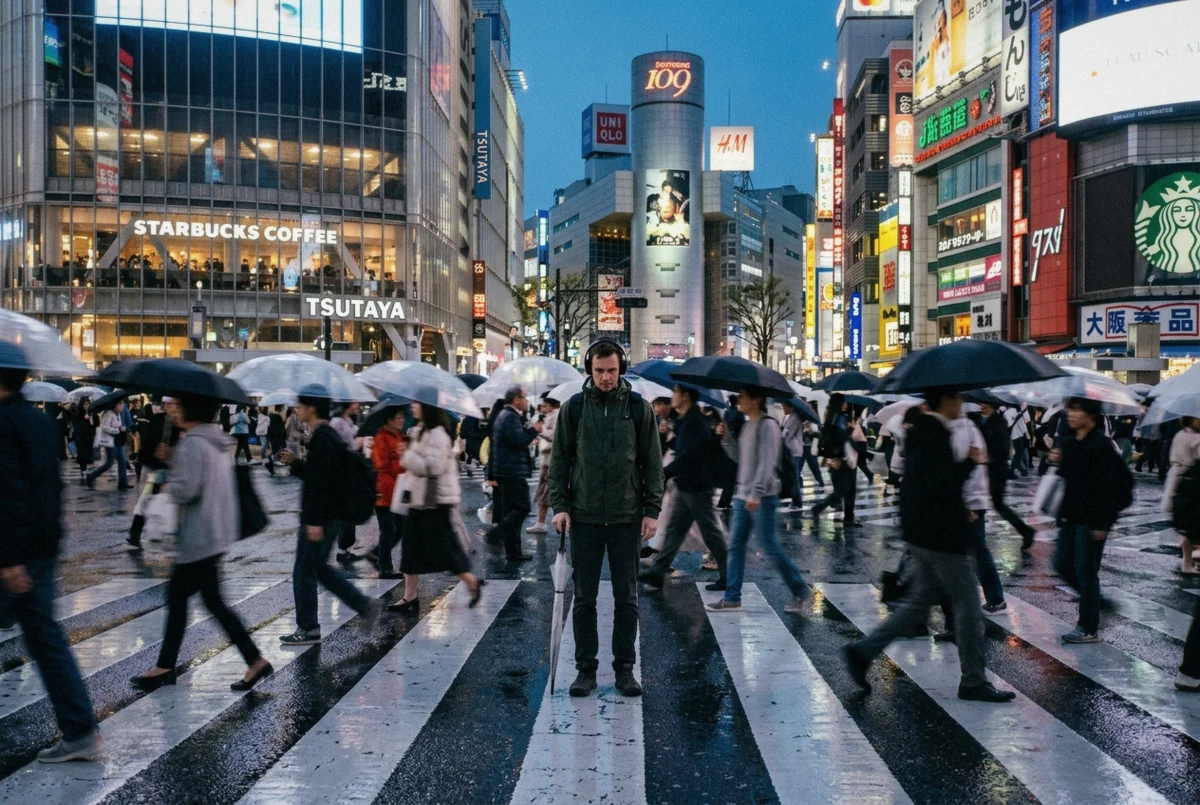
The same crossing is shot at $35, at $117 and at $134. The difference is not the location.
Quick answer The short version: five price tiers and what each one really buys
A photographer who shoots you in Tokyo costs $35 for a shared hour, $76 to $134 for a private hour, and $233 for a directed session with fifteen to twenty fully retouched frames. Below that, $50 buys a workshop where you hold the camera, and $21 buys a kimono rental with the photoshoot as an optional extra. Above it, concierge services quote from $325 for thirty minutes. The gap between the $35 hour and the $325 half hour is not image quality; it is who does the matching, the admin and the guarantee. The session comparison lines up all fourteen with what each one includes.
Key takeaways
- Cheapest hour with a real photographer: $35 in Shinjuku, in a group of up to four
- The private-hour band is $76 to $134, and it is where almost every listing sits
- $233 buys direction plus 15 to 20 fully retouched frames rather than more minutes
- Concierge services in the same search results quote from $325 for 30 minutes
- Per edited photograph, the Instax session works out under $4 and the cinematic shoot about $1.70 per colour-graded frame
The Ladder, Rung by Rung
Prices read from the listings in August 2026. Where a listing is priced per group, the per-person figure depends on how many of you turn up, which is the single biggest lever on this page.
| Tier | Price | What it is | Example |
|---|---|---|---|
| Garment only | from $21 | Kimono rental; the shoot is a checkout add-on | Asakusa kimono walk |
| You hold the camera | $50 to $55 | A workshop with a model, or a guide walking you to viewpoints | Portrait workshop |
| Shared hour | $35 | A photographer, but in a group of up to four | Shinjuku midnight session |
| Private hour | $57 to $134 | One photographer, your party only, 20 to 80 photos | Kabukicho neon hour |
| Directed session | $233 | Creative direction, 80 to 150 graded, 15 to 20 retouched | Cinematic street shoot |
| Studio makeover | $223 | Hair, makeup, costume, private studio, all files | Kimono makeover studio |
| Concierge service | from $325 | Matching, admin and a guarantee on top of a local shooter | Flytographer's published Tokyo rate |
Why the middle of the ladder is so crowded
Nine of the fourteen sessions sit between $57 and $134 for roughly an hour, and they are competing on things that are not price: how fast the gallery arrives, how many frames you keep, whether the route is fixed or chosen on the night. When four listings quote within twenty dollars of each other, the useful comparison is what happens after the shoot. One guarantees the gallery inside 48 hours.
One keeps it in the cloud for thirty days and then deletes it. Four publish no delivery date at all.
What Your Budget Actually Buys
If you have under $50
either the shared midnight hour in Shinjuku or a kimono rental with your own phone. Both are real options, and neither is a private portrait session
If you have $75 to $135
the whole private-hour market is open. Choose on delivery speed and photo count rather than on price, because they barely differ
If you have $200 or more
you are buying either retouching (the cinematic session) or transformation (the studio makeover). Decide which of the two you actually want
If there are four of you
the per-group listings change the maths completely: $91 for up to twenty people in Asakusa is under $25 a head, while a per-person session at $107 is $428
Cost Per Photograph, Which Is the Number That Matters
Hourly rates hide the product. What you take home is a set of files, and the sessions differ by a factor of ten in how many of those you get. Dividing the price by the published photo count reorders the whole catalogue.
| Session | Price | Photos published | Per photo |
|---|---|---|---|
| Cinematic street shoot, 90 min | $233 | 120 to 150 graded, 20 retouched | about $1.70 graded |
| Instax night shoot | $76 | 20 edited plus 5 prints | about $3.80 |
| Cyberpunk neon session | $85 | 35+ for one guest | about $2.40 |
| Shibuya neon tour | $117 | 35+ for one guest | about $3.30 |
| Daytime portrait tour | $80 | about 50 | about $1.60 |
| Asakusa temple and river | $91 | 20, 50 or 75 by package | $1.20 to $4.50 |
| Shibuya Crossing session | $134 | Not published | Unknown by design |
The two numbers that break the arithmetic
The first is retouching. A colour-corrected frame and a fully retouched one are different products, and only the cinematic session prices both: 80 to 100 graded with 15 retouched at one length, 120 to 150 with 20 at the other. Everywhere else, retouching either is not offered or is described so loosely that you should assume colour correction only. One listing says both things on the same page.
The second is the listing that publishes no count at all. The Shibuya Crossing session states that its photographers select the best photos for your purchased package and sells extras separately, without saying what the package contains. At $134 that is the highest per-photo risk in the catalogue, and it is worth asking before booking rather than after.
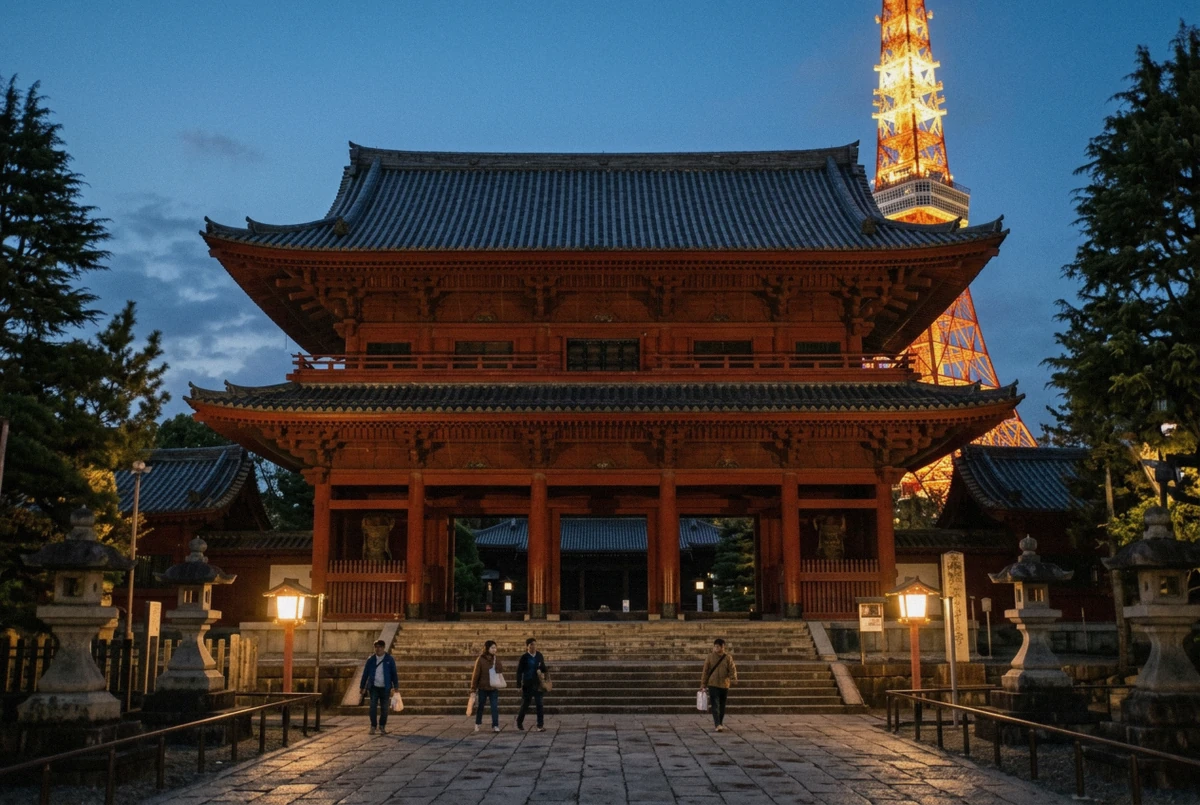
The $57 rung: three stops around the tower, 20 to 80 photographs back in 48 hours.
The Extras Nobody Quotes
Every listing has an exclusions list, and across fourteen of them the same five items keep appearing. None of them is large on its own. Together they are the difference between the price you compared and the price you paid.
What is excluded almost everywhere
Transport to the meeting point is excluded on every listing that publishes exclusions, and one reviewer records paying his own fare between Shibuya and Shinjuku mid-session. RAW files are excluded on every listing that mentions them. Prints are extra everywhere except the Instax session, which hands over five. Heavy retouching is excluded wherever the subject is raised at all. And admission fees, where a session touches a paid attraction, are yours: the Tokyo Tower session is explicit that it shoots the exterior and needs no entry ticket.
On the kimono side the same pattern repeats with different numbers. Makeup is excluded on the Asakusa rental session, hair styling is a ¥1,100 to ¥3,300 add-on at two of the big rental chains, and a refundable ¥3,000 deposit is taken at one of them. The kimono rental breakdown has the shop-by-shop figures.
Currency, dates and the price you actually see
Every figure on this site is the listing's own from-price in US dollars, read in August 2026. Those prices move with the date, the party size and the platform's own promotions: three of the fourteen listings were showing a discount against a higher original price on the day we checked, and one warns outright that the final price may vary with date and participants. Treat the ladder as the shape of the market rather than a quote, and take the live number from the comparison table.
Tipping, and what it is not
Tipping is not customary in Japan and no listing here asks for it. What operators do ask for, repeatedly, is punctuality: two sessions treat fifteen minutes of unannounced lateness as a no-show, and several state that the session ends at its scheduled time whatever time you arrive. Arriving ten minutes early is worth more to the result than any gratuity, because the minutes you lose come out of the only part of the product you are actually buying.
Is Any of It Worth It?
The honest answer depends on what you cannot do yourself. Tokyo is generous to a phone camera: the crossing, the temple approach, the neon of Kabukicho all photograph well without help, and the photo spots map lists fourteen locations no session on this site even visits. The whole Tokyo photoshoot catalogue exists for the other half of the problem.
What a photographer buys you is being in the frame, lit properly, at the one hour when the location works. Reviewers on these listings repeat the same two reasons in different words: the photographer knew exactly where to stand and when, and the direction made a self-conscious person relax within five minutes. At $35 to $134, that is a cheaper souvenir than most of what people bring home from Tokyo, and at $325 it is a different kind of purchase entirely: a service with a concierge layer, not a better camera.
Where the cheap end genuinely wins
Two of the low rungs are not compromises. The portrait workshop at $50 hires a model for you to photograph and teaches off-camera flash, which is a photography lesson at the price of a cheap dinner. And the Asakusa kimono walk at $21 is a legitimate way to spend a morning even if you never buy the photoshoot add-on, as long as you know the booking time is your studio check-in and the garment goes back by 17:30.
What a second session would cost you
Nobody plans two, and then people do it anyway, because the first one solves the nerves and the second one gets the frames. The cheap way to run that plan is to book different products rather than the same one twice: an hour of neon on one night and a temple morning on another cover completely different light, and together they still cost less than a single concierge half hour. If you shoot both in the same district, you will notice the second gallery repeating the first, because the routes overlap far more than the listings admit: three of the Shinjuku sessions work the same four streets, and two of them stop in the same lantern alley.
Tokyo Photoshoot Cost: Questions People Ask
How much does a photographer cost in Tokyo?
For a session where a professional photographs you: $35 for a shared hour, $57 to $134 for a private hour, and $233 for a directed shoot with fifteen to twenty fully retouched frames. Concierge services ranking in the same search quote from $325 for thirty minutes. The full ladder has each tier with an example listing.
How much should a 30 minute photoshoot cost in Tokyo?
Roughly $57 to $91 on the local market. The Tokyo Tower session starts at $57 for its 30-minute tier, the Asakusa session's shortest package is $91 for a group of up to twenty, and the Shibuya Crossing session is $134 for fifteen to forty five minutes. A concierge service quotes from $325 for the same half hour, which is the clearest single comparison on this page.
Is $100 an hour reasonable for a photographer in Tokyo?
It is the middle of the market, and at that price you should expect a private session, 35 or more edited photographs, and a named meeting point. What varies at $100 is delivery: one listing guarantees 48 hours, another deletes the gallery after 30 days, and four publish no date. Ask before booking.
Why is a kimono photoshoot priced so differently?
Because two purchases are bundled in different proportions. A rental shop sells the garment from about ¥2,000 and prices its own photo package from ¥16,000 on top. Our catalogue's kimono walk starts at $21 with the shoot as an option, and the studio makeover is $223 with hair, makeup, costume and every file included. The rental price breakdown compares the shops directly.
Do prices change with the season?
The listings do not publish seasonal pricing, but availability tightens in cherry blossom week and through the December foliage, and three listings were running discounts on the day we checked. The practical effect is on booking rather than on price: the slots that sell out first are the ones at the right hour, not the cheap ones.
What is the cheapest way to get good photographs in Tokyo?
Book the shared midnight session at $35 if you want to be photographed, or take the workshop at $50 if you would rather learn. If neither appeals, the photo spots map tells you where and when to stand, and that costs nothing at all.
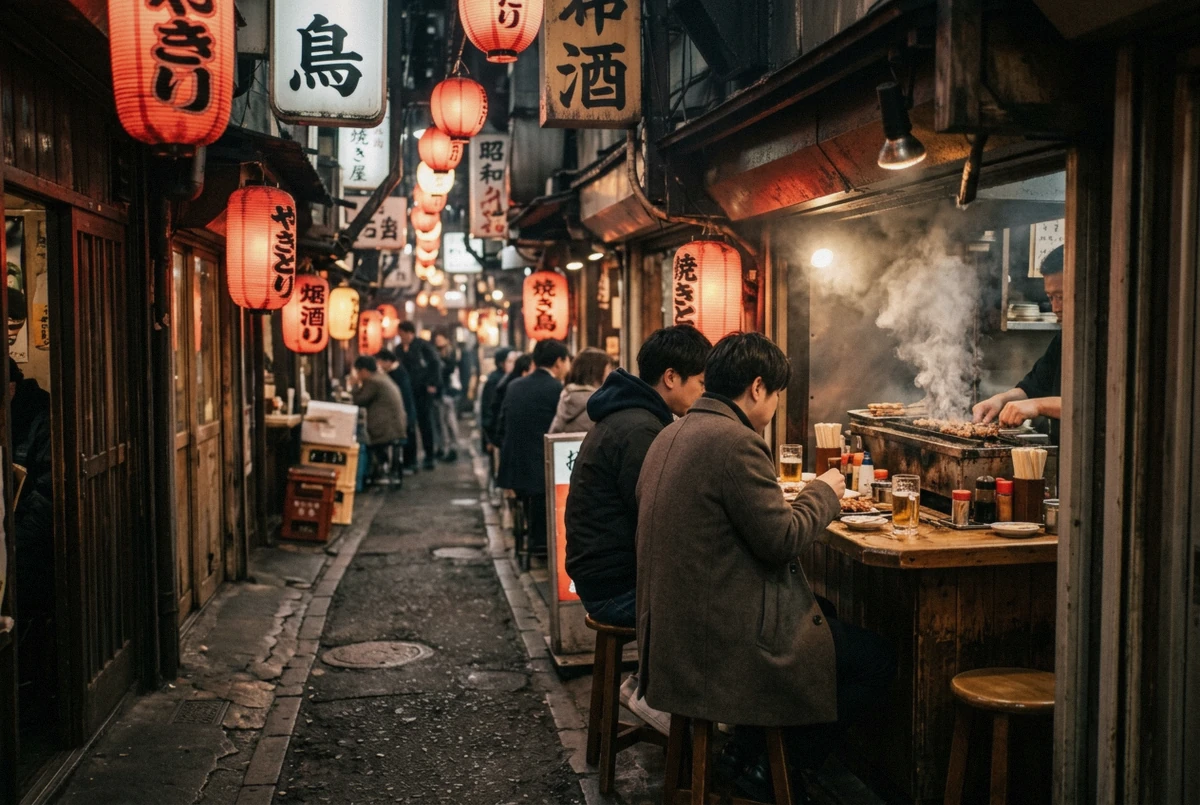
Three sessions in the $76 to $117 band work these same streets.